
Cooperatives Need New Narrative as 'Collective Entrepreneurs'
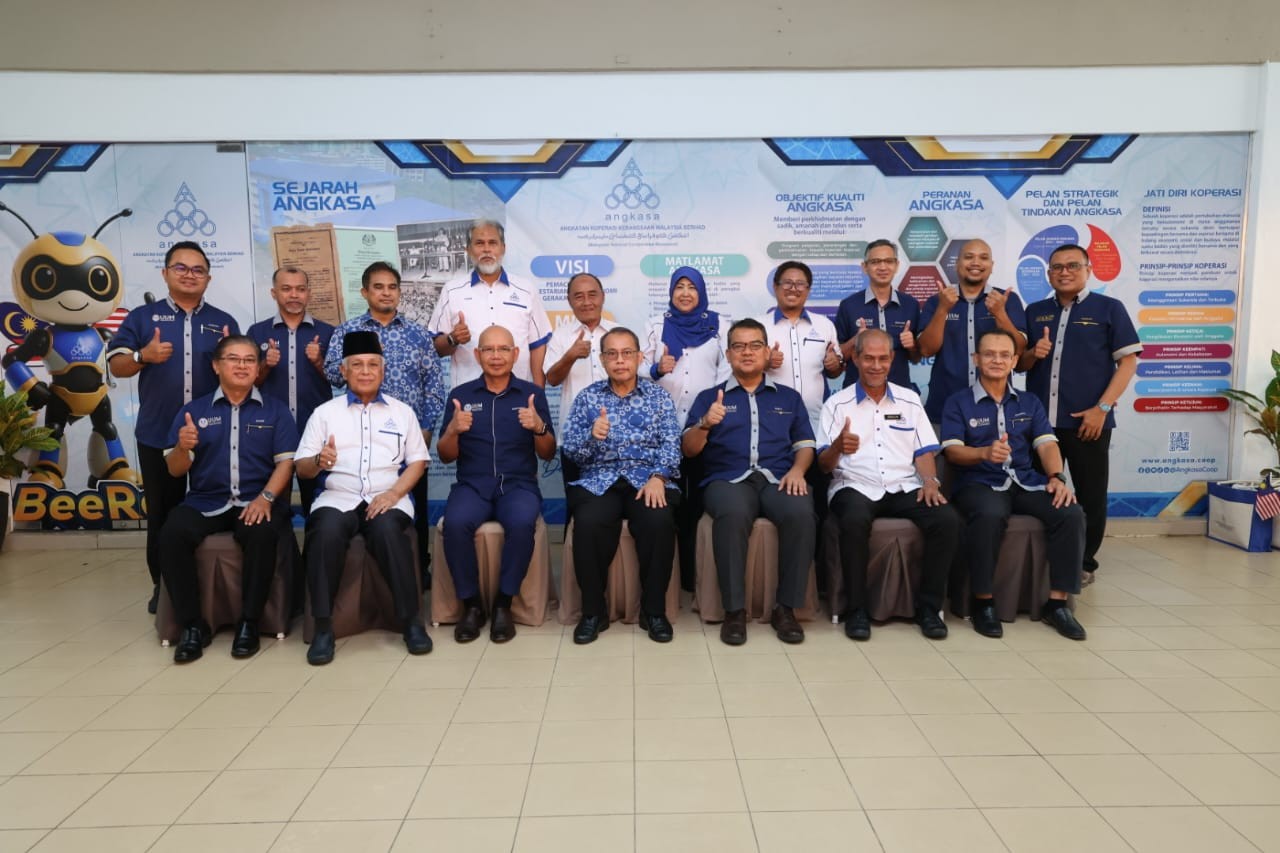
UUM ONLINE: The cooperative movement in Malaysia needs to develop a new narrative by positioning cooperatives as a platform for 'collective entrepreneurs', thus changing the public perception that they are small, traditional organisations primarily serving rural communities.
President of the National Cooperative Movement of Malaysia Berhad (ANGKASA), Datuk Seri Dr. Abdul Fattah Abdullah, said this shift in perception was necessary as the cooperative movement had grown well beyond small-scale business activities and had the potential to become a significant economic force for the country.
He said cooperatives are now actively involved in various strategic sectors, including finance, agriculture, housing, tourism, education, healthcare, digital technology and the new economy.
"Sometimes when we mention cooperatives, there is still a perception that cooperatives are small organisations involved in limited-scale business activities, or they are cooperatives for villagers or the underprivileged.
"We need to change this perspective. Cooperatives have considerable strength and are capable of becoming competitive economic players,” he said during the Adjunct Professor Lecture titled 'Strengthening Student Cooperatives Through Academia and Industry Synergy,' held in conjunction with the signing ceremony of the Memorandum of Agreement (MoA) for the Branding of Inasis ANGKASA, here, today.
Dr. Abdul Fattah said the strength of the cooperative movement lies not only in the number of registered cooperatives but also in its extensive membership base and its ability to pool capital and economic resources.
Therefore, he described cooperatives as 'collective entrepreneurs', distinguishing them from the conventional concept of individual entrepreneurship, which typically operates through privately owned companies or enterprises.
“When we talk about entrepreneurs, we often see them as individuals. However, cooperatives represent entrepreneurship in a collective form, where a group of members work together to operate businesses, pool capital and share the benefits,” he said.
According to him, this collective approach has significant potential to strengthen the community economy, particularly by enabling wealth and capital to be pooled and channelled through the cooperative platform.
He also stressed that cooperatives should not be viewed solely as profit-oriented entities, but as organisations with a strong social dimension that can facilitate more inclusive economic development.
He said that the approach was also consistent with Islamic principles that emphasise the importance of cooperation and mutual assistance in matters of goodness, as stated by Allah SWT in Surah al-Ma’idah, verse 2: “Wa ta‘awanu ‘ala al-birri wat-taqwa,” which means to help one another in matters of goodness and piety.
“In the Malaysian context, cooperatives are among the best platforms for pooling wealth from individuals and leveraging it collectively to strengthen the community economy.
“This is the new narrative that we need to promote so that society sees cooperatives as an economic force rather than merely as traditional organisations,” he said.
Dr. Abdul Fattah said the cooperative movement’s substantial membership and pooled capital demonstrated its capacity to become a major national economic player, provided that cooperatives were managed professionally and continued to strengthen their identity and competitiveness.
He said the movement must maximise this potential by enhancing professional management and governance, promoting innovation and exploring emerging economic sectors.
“We need to build this new narrative so that society no longer sees cooperatives as organisations belonging only to villagers or the poor.
“Instead, cooperatives should be recognised as an economic platform that is open to all segments of society and capable of harnessing collective strength,” he said.
Dr. Abdul Fattah said changing public perceptions was crucial to ensuring that the cooperative movement could play a more significant role in strengthening the economic well-being of both the people and the nation.
According to him, statistics on the number of cooperatives, members, capital and assets should not be viewed merely as figures, but as indicators of the collective economic strength held by the Malaysian community.
“These figures are not just statistics. They represent an economic strength that is collectively owned by the community and the Malaysian people.
“More importantly, these figures demonstrate that cooperatives have the capacity to become competitive economic players, provided they are managed professionally and their identity continues to be strengthened,” he said.